






Vinyl vs Mesh Banners: Which One Do You Need?
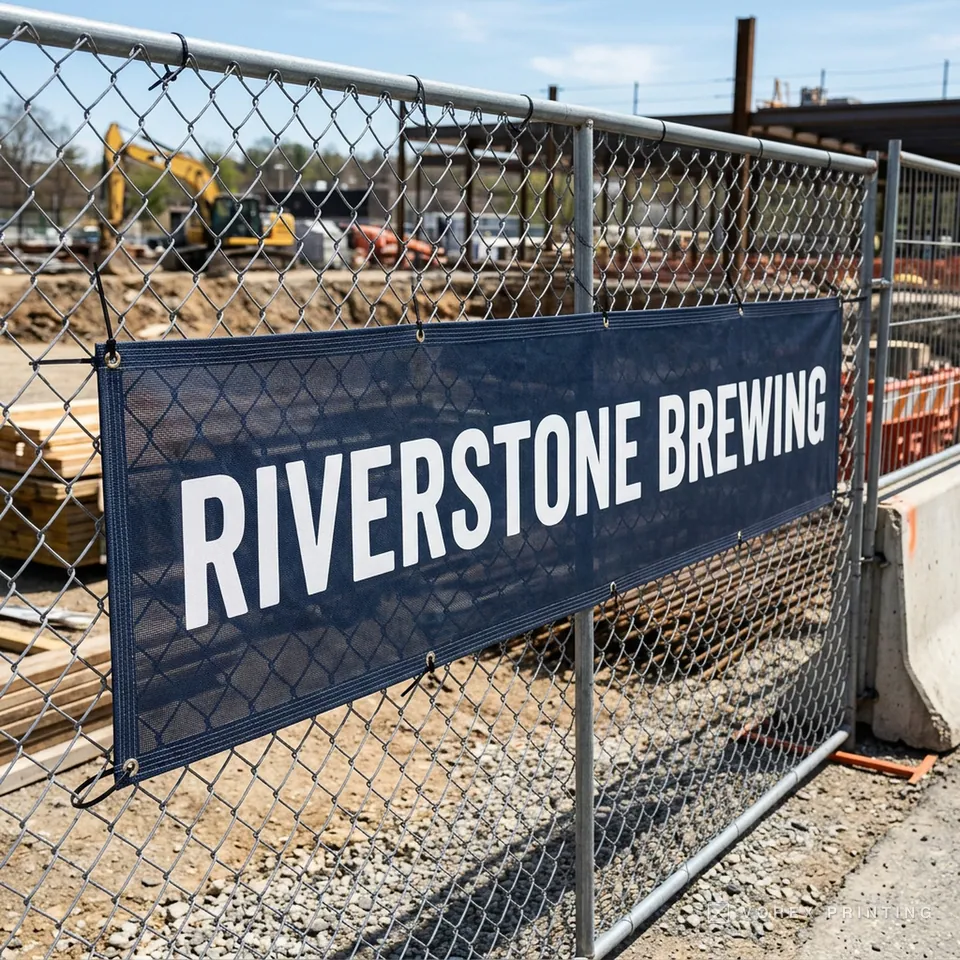
Pick a vinyl banner for walls, storefronts, stages and other sheltered spots where you want the sharpest, brightest print. Pick a mesh banner for fences, scaffolding and open, windy sites: its weave is roughly 30% holes, so part of the wind passes through instead of pulling on the fence. Vinyl can be printed on both sides (on blockout); mesh is single sided.
Published 9 Oct 2026 by the Vorex Printing team
The short answer
Choose a vinyl banner when the banner hangs flat against a wall, a stage, a storefront or anywhere sheltered, and you want the sharpest, brightest print. Choose a mesh banner when it hangs on a fence, scaffolding or between posts in the open, where wind would turn a solid sheet into a sail. Everything else (weight, finishing, single or double sided) follows from that one question: will wind hit it?
What each material is
Vinyl banner material is a solid PVC sheet laminated over a woven polyester scrim. It is sold by weight per square yard: 13 oz is the everyday indoor and outdoor grade, and 15 oz and 18 oz are heavier. 18 oz is usually a blockout vinyl with an opaque core, so a print on each side does not show through the other.
Mesh banner material is a polyester weave coated in PVC with small, evenly spaced holes. The common fence grade is around 8 oz. Most suppliers describe it as "70/30" mesh: about 70% material and 30% holes (NorthCoast Banners' mesh buying guide, read 9 Oct 2026). One wholesale guide lists 8 oz mesh at roughly 30% open area and 13 oz solid vinyl with no wind permeability at all (IW Banner's vinyl vs mesh guide, read 9 Oct 2026).
Vinyl vs mesh at a glance
| Vinyl banner | Mesh banner | |
|---|---|---|
| Material | Solid PVC over polyester scrim; 13, 15 or 18 oz | PVC-coated polyester weave, about 8 oz, roughly 30% open |
| Wind | Catches all of it; needs shelter, wind slits or a wall behind it | Lets part of it through, so fences and ties carry less load |
| Dense, bright colour and fine detail | Bold graphics read well; fine detail and small text soften | |
| Double sided | Yes, on blockout vinyl | Not on our mesh: the open weave shows the print faintly reversed on the back |
| Best places | Walls, storefronts, stages, indoor events, banner stands | Construction fences, ballpark and field fences, scaffolding, open festival sites |
Wind is the deciding factor
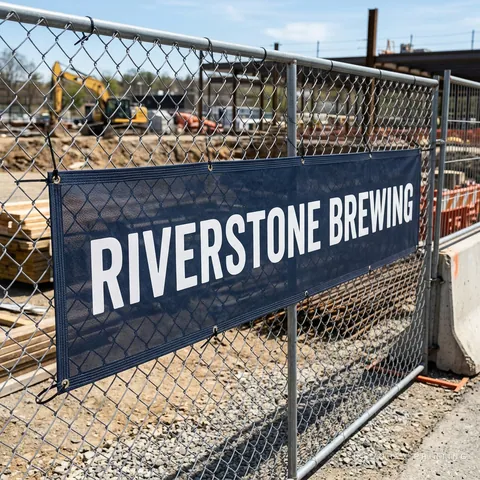
A solid banner on a chain-link fence turns the fence into a sail. Every gust pulls on the grommets, the ties and the fence posts, which is why solid banners on open fences tear at the corners or pull fence panels over. Mesh does not make wind disappear: with about 70% of the surface still solid, most of the wind still loads the fence. But the holes relieve enough pressure that a mesh banner tied through every grommet is the standard choice for exposed sites.
If a vinyl banner must hang somewhere breezy, wind slits (half-moon cuts in the vinyl) let some air through. They help on a partly sheltered spot, but they do not replace mesh on a fully exposed fence.
Print quality and readability
Vinyl gives the denser, brighter print because the ink lands on a solid surface. On mesh, the holes take a share of the image, so photos look slightly softer up close and thin lines or small text lose crispness (NorthCoast Banners describes mesh as softening fine detail, read 9 Oct 2026). At normal viewing distance for a fence banner, a bold logo, a short headline and a large phone number or web address read clearly on either material. If your design depends on fine detail, small type or a photo meant to be seen up close, use vinyl.
A practical rule for both: size the lettering for the distance people read it from, and keep fence-banner text short. Your digital proof is shown at final size, so you can check how small text will look before anything prints.
Single or double sided
For a banner read from both sides, such as one hung across a walkway, order double-sided vinyl on blockout material so neither side ghosts through in daylight. Mesh is single sided: the print shows faintly reversed on the back, and a second print would show through the weave. For a fence seen from both sides, order two mesh banners and hang them back to back.
Hanging and finishing
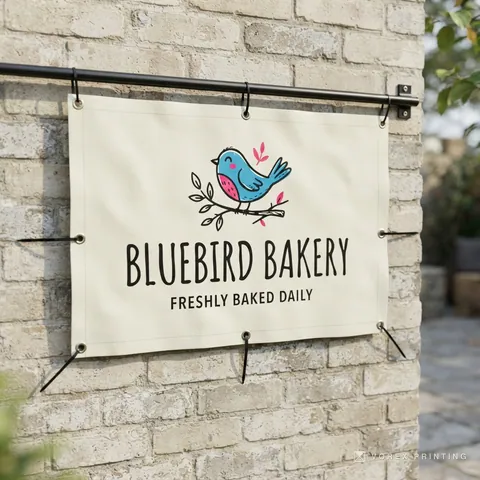
Both materials are hemmed and finished with grommets. On a wall, a vinyl banner usually takes grommets every 2 to 3 ft; on a fence, mesh takes more ties, typically a grommet every 2 ft, and a webbing-reinforced hem on long runs so a gust does not tear a grommet out. Pole pockets suit either material when the banner hangs from a pipe or between posts. Fix every grommet, not just the corners, and use bungee cords outdoors so a gust stretches the cord instead of the hem. Long fence runs are easier to install as several panels than as one roll.
Which one should you order?
- Grand opening banner over a shop door: vinyl, 13 oz.
- Construction site fence screen: mesh, with webbing hems and a grommet every 2 ft.
- Sponsor banners on a ballpark fence: mesh.
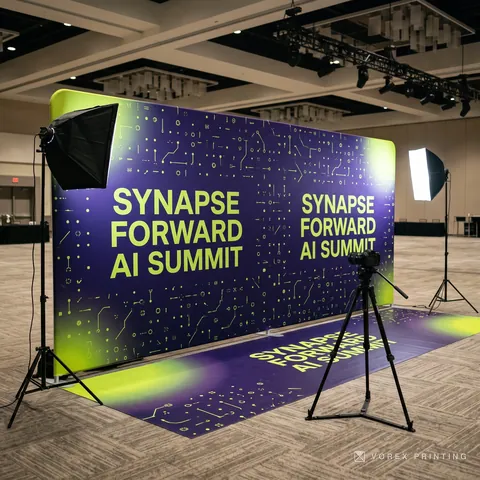
- Stage backdrop indoors: vinyl, or a step-and-repeat backdrop on a frame.
- Banner across a walkway, read both ways: double-sided blockout vinyl.
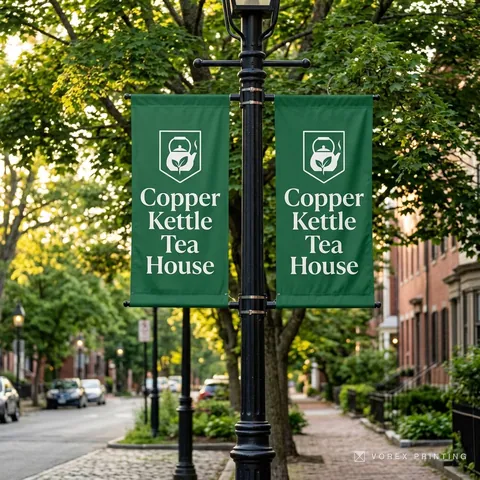
- Street light poles: pole banners, which are double-sided blockout vinyl with pole pockets sized to the bracket arms.
Not sure? Tell us where the banner hangs, how long it stays up and the size of the space on the quote form. A printing specialist recommends the material and finishing, and you approve a digital proof at final size before anything is printed.
Read next: Banner Sizes Explained: Which Size for a Wall, Fence, Pole or Stand? and How to Hang a Vinyl Banner: Walls, Fences, Poles, Stands and Ceilings.
Sources
NorthCoast Banners, "How to buy mesh banners" (northcoastbanners.com), and IW Banner, "13 oz. vs. 18 oz. vs. 8 oz. Mesh: wholesale material guide" (iwbanner.com), both read 9 Oct 2026. Product details are from our vinyl banner and mesh banner pages.
Is a mesh banner better than a vinyl banner outdoors?
How much wind goes through a mesh banner?
Can I print small text on a mesh banner?
Can a mesh banner be double sided?
What weight vinyl banner should I order?
Ready to see your design printed big?
Send us the size and quantity. We reply with pricing, material options and a digital proof of your artwork.
