






Custom Canopy Tents: Size, Frame, Walls and Weights
Most vendors need a 10 x 10 ft pop-up canopy: it covers one 6 ft table with room behind it and is the booth size most markets, expos and tournaments allow (10 x 15 ft takes two tables, 10 x 20 ft makes a team shelter). Choose aluminum if the tent travels every weekend and steel if it stays at one site, print the logo on the peaks with only a few words on the 10 in valances, add a back wall for a printed background, and anchor it with stakes on grass or a weight bag on each leg on pavement.
Published 23 Oct 2026 by the Vorex Printing team
The short answer
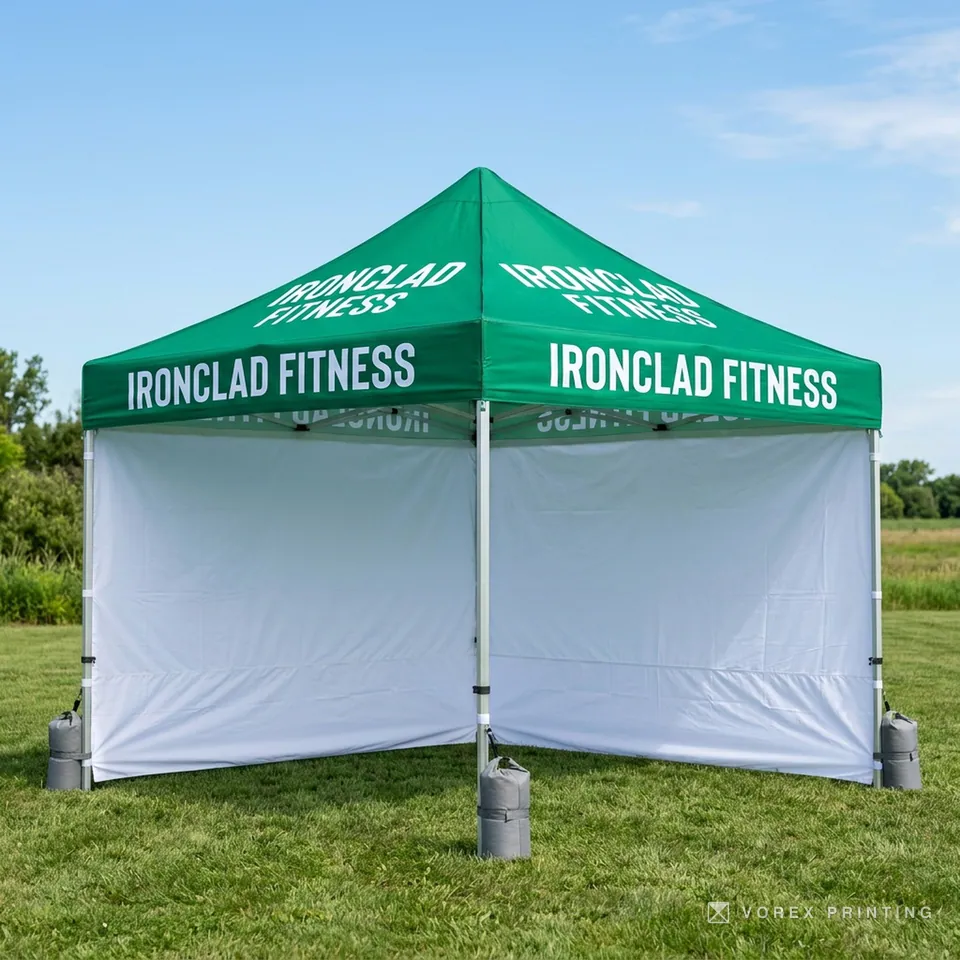
For most markets, festivals and tournaments, a custom canopy tent is a 10 x 10 ft pop-up: it covers one 6 ft table with room to stand behind it, and it is the booth size most events allow. Pick an aluminum frame if the tent travels every weekend, steel if it stays at one site. Print the logo on the peaks and valances (keep valance artwork short, the valance is only about 10 in tall), add a back wall if you want a printed background and less wind across the table, and bring stakes for grass or weight bags for pavement.
Canopy tent choices at a glance
| Decision | Options | How to choose |
|---|---|---|
| Size | 10 x 10 ft, 10 x 15 ft, 10 x 20 ft | 10 x 10 for one 6 ft table; 10 x 15 for two tables; 10 x 20 for a team shelter or registration area. Check what your event allows. |
| Frame | Aluminum or powder-coated steel pop-up | Aluminum: lighter, does not rust, for a tent that travels. Steel: heavier, lower in cost, steady at a fixed site. |
| Printing | All 4 peaks and 4 valances, or selected panels | Print every side if people walk all round; print the valances facing the crowd if the tent backs onto a wall or a row. |
| Walls | Back wall, half walls, full walls with a zip door | Back wall for a printed background and wind off the table; half walls to close the sides at waist height; full walls to make a small room. |
| Anchoring | Stakes and guy ropes, or weight bags | Stakes and ropes on grass; a weight bag on each leg on pavement. |
1. Size: start from the booth and the table
The 10 x 10 ft footprint is the standard because it is the booth size most farmers markets, expos and tournaments give each vendor, and it fits one 6 ft table with space behind it for you and your stock. A 10 x 15 ft frame takes two tables. A 10 x 20 ft frame works as a team shelter at a tournament or a registration area at an event. Before you order, check the booth size in your event's vendor rules: a larger tent is no use if the plot is 10 x 10.
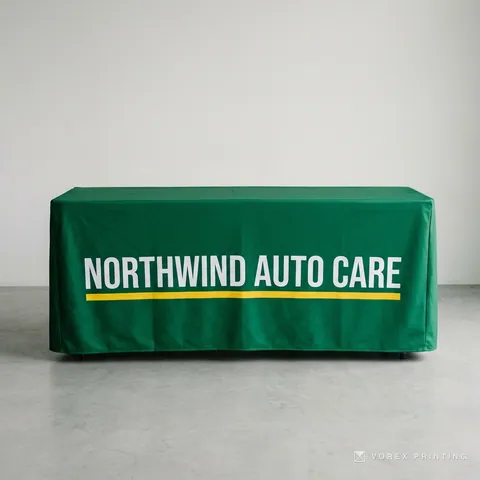
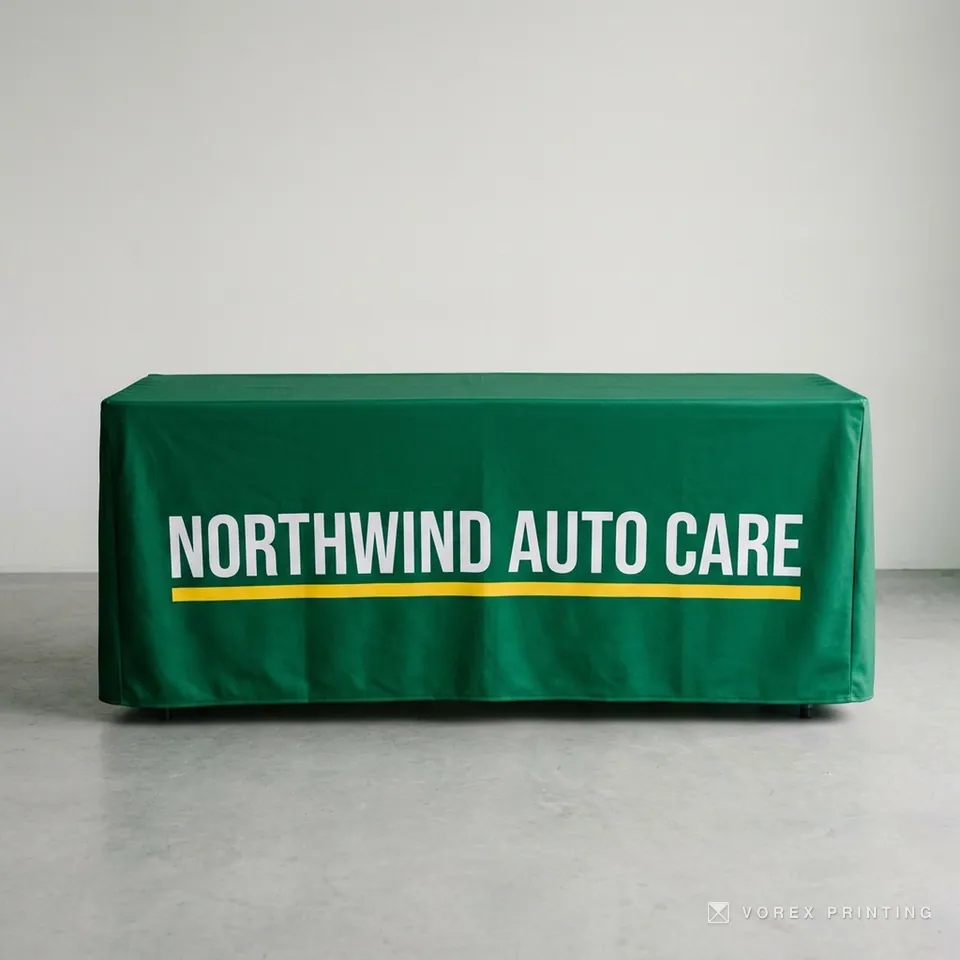
If you also want the table branded, a table cover for a 6 ft table (72 x 30 x 30 in) is made to those table dimensions, so the tent and the table read as one booth.
2. Frame: aluminum or steel
Both are pop-up frames with scissor arms and telescoping hexagonal legs, and both fold into a compact bundle that rides in a wheeled carry bag.
- Aluminum is lighter to carry and does not rust. Choose it if the tent goes to a different market or field every weekend.
- Steel (powder coated) is heavier and lower in cost, and it holds steady at a fixed site.
Ask for the leg profile and wall thickness; the quote states them for the frame you choose.
3. Printing: peaks, valances and how much text
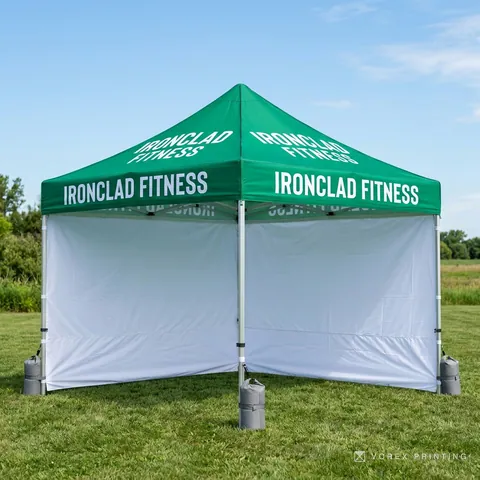
The canopy top is 600D polyester with a water-resistant coating. The four peak panels and four valances are printed by dye sublimation before they are sewn together: the ink is pressed into the fibre under heat, so the print survives sun, folding and rain.
- Peaks: the large sloped panels carry the logo, seen from a distance across a field or a car park.
- Valances: the strip around the edge is only about 10 in tall, so keep it to a logo and a few words, such as the name and a website.
- All sides or some: print all four peaks and valances for a tent seen from every side, or print the valances facing the crowd and leave the rest in a solid colour. Each printed panel gets its own proof at final size.
Already own a standard 10 x 10 ft pop-up frame? A printed top alone can be cut and sewn to fit it. Send the frame make or a photo and the peak height; non-standard frames need measurements first.
4. Walls: back wall, half walls or full walls
Walls attach with hook-and-loop strips, and each can be printed, plain in a brand colour or a clear window panel.
- Back wall: a printed background behind you that also keeps wind off the table. The most useful single add-on for a market booth.
- Half walls: close the sides at waist height, so neighbours' booths do not blend into yours.
- Full walls with a zip door: turn the tent into a small room, for example a changing area at a tournament.
Walls can be added to the same frame later if you start with the top only.
5. Set it up and keep it down
Two people raise the frame: hold opposite corners, walk backwards until the scissor arms open, then lift each leg to the first stop. Fit the top before the legs are fully extended. Then anchor it:
- On grass: drive the stakes and tie the guy ropes.
- On pavement: hang a weight bag (or sand bag) on each leg.
Walls clip on last. Ask for stakes, ropes and weight bags with the tent so the kit is complete at the first event. The top sheds a shower, but it is a shade and event tent, not a storm shelter: in heavy rain or wind, lower the legs, add weight and take the walls off to cut the load on the frame.
6. Make it last for years of events
Let the top dry before you roll it, brush off grit so it does not wear the print, and store the frame with the legs retracted. If a panel is damaged, a replacement top can be printed from the same proof without buying a new frame.
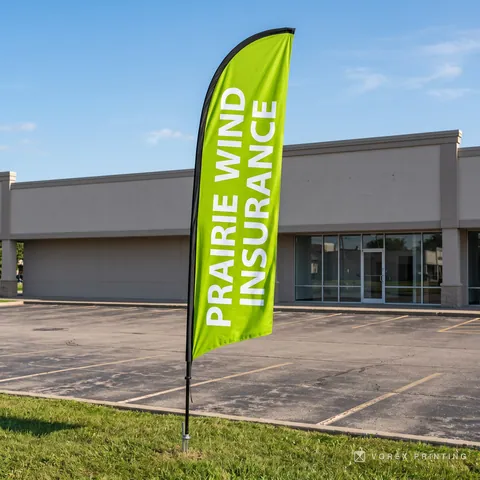
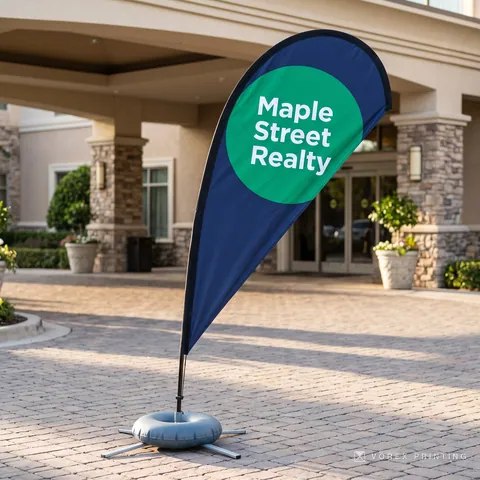
Pair the tent with a feather flag at the front corner so people find the booth from the far end of the row, or a retractable banner stand inside the tent for a menu or a price board.
Checklist before you order
- The booth size your event allows, and how many tables go under the tent.
- Frame: aluminum (travels often) or steel (fixed site).
- Which panels to print: all peaks and valances, or only the sides facing the crowd.
- Walls: none, a back wall, half walls or full walls, and which are printed.
- Ground: grass (stakes and ropes) or pavement (weight bags).
- Your logo as a vector or high-resolution file.
Send it on the quote form, with delivery anywhere in the USA. Every printed panel gets a digital proof at final size before printing, and production is fast once you approve it.
Read next: Floor Graphics: Surfaces, Sizes, Shapes and How to Apply Them and Custom Table Covers: Throw, Fitted, Stretch or Runner, and Which Size.
What size canopy tent do I need for a market booth?
Is an aluminum or steel canopy frame better?
What goes on the valance of a canopy tent?
How do I keep a canopy tent from blowing away?
Can I get just a printed top for a tent frame I already own?
Is a custom canopy tent waterproof?
Ready to see your design printed big?
Send us the size and quantity. We reply with pricing, material options and a digital proof of your artwork.
